The Infinite Variations of Kimchi: Regional Characteristics and Flavors
김치의 무한한 변주: 지역별 특색과 맛
Tap any word for its meaning, grammar and audio — and keep it as a card.
Read with Klick김치는 한국을 대표하는 발효식품으로 전 세계적으로 그 명성을 떨치고 있다.Kimchi is a representative fermented food of Korea, spreading its reputation worldwide.
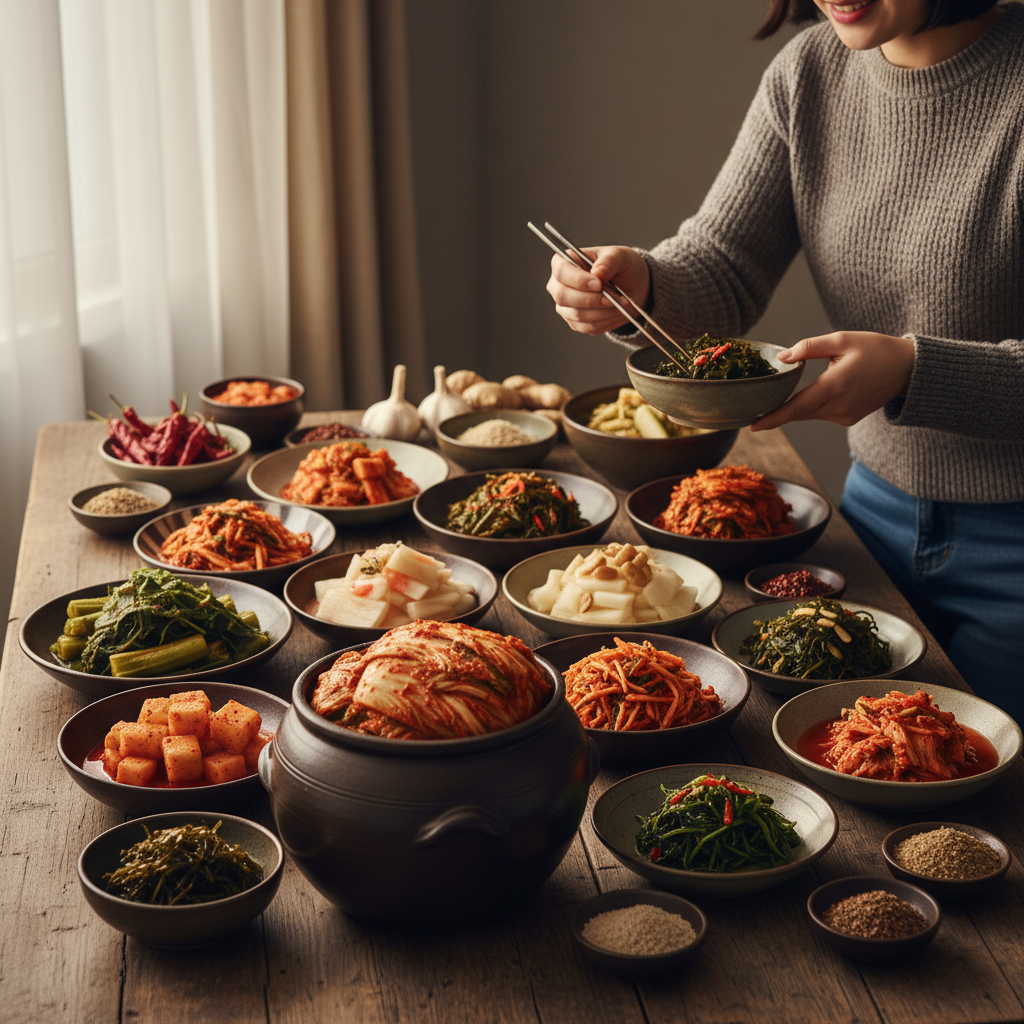
대개 배추김치가 가장 널리 알려져 있으나, 실제 김치의 세계는 상상 이상으로 다채롭다.Napa cabbage kimchi is generally the most widely known, but the actual world of kimchi is more diverse than one can imagine.
지역마다 기후, 특산물, 식문화가 다르므로, 이에 따라 독특한 김치들이 발전해 왔음을 알 수 있다.Since the climate, local specialties, and food culture differ in each region, it is evident that unique kimchis have developed accordingly.
이러한 다양성은 단순한 재료의 변화를 넘어, 각 지역의 정체성을 담고 있음을 시사한다.Such diversity suggests that it goes beyond a simple change of ingredients, embodying the identity of each region.
예를 들어, 전라도 지역에서는 갓김치와 고들빼기김치가 유명하며, 특유의 쌉쌀한 맛과 향으로 미식가들의 사랑을 받는다.For example, in the Jeolla Province, mustard leaf kimchi and godeulppaegi kimchi are famous, receiving the love of gourmets for their unique slightly bitter taste and aroma.
특히 갓김치는 톡 쏘는 맛이 일품일 뿐만 아니라, 섬유질이 풍부하여 건강에도 이롭다고 한다.Mustard leaf kimchi, in particular, is not only excellent for its tangy taste but is also said to be beneficial for health due to its rich fiber content.
경상도에서는 멸치액젓을 사용하여 깊고 진한 맛을 내는 김치가 발달하였으며, 부추김치나 콩잎김치 등 이색적인 재료를 활용한다.In Gyeongsang Province, kimchi that produces a deep and rich flavor using anchovy fish sauce has developed, and unique ingredients are utilized, as in chive kimchi or soybean leaf kimchi.
이처럼 지역 특산물을 적극적으로 활용함으로써, 각 김치는 고유의 풍미를 확보한다.By actively utilizing local specialty products in this way, each kimchi secures its inherent flavor.
북쪽 지역으로 가면 백김치나 동치미처럼 맵지 않고 시원한 맛의 김치들이 주를 이룬다.If you go to the northern regions, non-spicy and refreshing kimchis like white kimchi or dongchimi are predominant.
이들은 젓갈을 적게 쓰거나 아예 사용하지 않음으로써 재료 본연의 맛을 살리는 데 중점을 둔다.These kimchis focus on bringing out the inherent taste of the ingredients by using less or no salted seafood at all.
또한, 제주의 전복김치나 강원도의 명태식해처럼 해산물을 이용한 김치들도 지역적 특색을 잘 보여준다.Also, kimchis using seafood, such as Jeju's abalone kimchi or Gangwon-do's pollack sikhae, demonstrate regional characteristics well.
이처럼 김치는 단순한 반찬이 아니라, 한국인의 지혜와 지역별 특색이 어우러진 문화유산이다.As such, kimchi is not just a simple side dish but a cultural heritage where the wisdom of Koreans and regional characteristics are harmonized.
각 지역의 자연환경과 식문화가 반영된 김치들은 한국 음식 문화의 풍요로움을 더할 뿐만 아니라, 미식의 즐거움을 선사한다.Kimchis that reflect the natural environment and food culture of each region not only enhance the richness of Korean food culture but also bestow the pleasure of gourmet dining.
Key words
Words in this article
- 가다 to go
- 건강 health
- 그 that
- 김치 kimchi
- 내다 to make
- 들다 to give (an example)
- 반찬 side dish
- 받다 to receive
- 사용하다 to use
- 시원하다 cool
- 쓰다 to use
- 아니다 to not be
- 알다 to know
- 예 example
- 음식 food
- 이 this
- 잘 well
- 적다 few
- 가장 most
- 각 each
- 깊다 deep
- 다르다 different
- 단순하다 simple
- 더하다 to add
- 또한 also
- 맵다 spicy
- 보여주다 to show
- 알려지다 to be known
- 이러한 such
- 이상 more than
- 이용하다 to use
- 재료 ingredients
- 전 all
- 즐거움 joy
- 지역 region
- 쪽 side
- 해산물 seafood
- 고유 inherent
- 기후 climate
- 널리 widely
- 넘다 to exceed
- 다양성 diversity
- 담다 to contain
- 대표하다 to represent
- 문화 culture
- 문화유산 cultural heritage
- 발달하다 to develop
- 발전하다 to develop
- 변화 change
- 살리다 to save
- 세계 world
- 세계적 global
- 식문화 food culture
- 유명하다 famous
- 이롭다 beneficial
- 이루다 to achieve
- 이색적 unique
- 적극적 active
- 지혜 wisdom
- 특히 especially
- 풍부하다 abundant
- 한국인 Korean person
- 활용하다 to utilize
- 독특하다 unique
- 본연 true nature
- 선사하다 to present
- 시사하다 to suggest
- 정체성 identity
- 지역적 regional
- 특색 unique characteristic
- 풍요롭다 rich
- 확보하다 to secure
Tap any word for its meaning, grammar and audio — and keep it as a card.
Read with Klick