Ajumma and Ajussi: Their Social Roles and Evolving Perceptions
아줌마와 아저씨: 사회적 역할과 변화하는 인식
Tap any word for its meaning, grammar and audio — and keep it as a card.
Read with Klick한국 사회에서 '아줌마'와 '아저씨'는 단순한 호칭을 넘어선다.In Korean society, 'ajumma' and 'ajeossi' go beyond simple titles.
이들은 특정 연령대의 기혼 남녀를 지칭하는 동시에, 한국인의 집단 무의식 속에 깊이 각인된 문화적 원형을 대표한다.These terms refer to married men and women of a specific age group, and at the same time, they represent cultural archetypes deeply imprinted in the collective unconscious of Koreans.
때로는 친근하고 억척스러운 생활력의 상징으로, 때로는 다소 무례하거나 고집스러운 이미지로 비치기도 한다.Sometimes they are seen as symbols of a friendly and tenacious ability to make a living, and sometimes they appear as somewhat rude or stubborn images.
이 두 호칭은 한국 사회의 변화와 함께 그 의미와 역할 또한 끊임없이 진화해왔다.Along with the changes in Korean society, the meaning and role of these two titles have also continuously evolved.
이들의 존재는 한국인의 삶과 정서에 지대한 영향을 미친다.Their existence profoundly influences the lives and sentiments of Korean people.
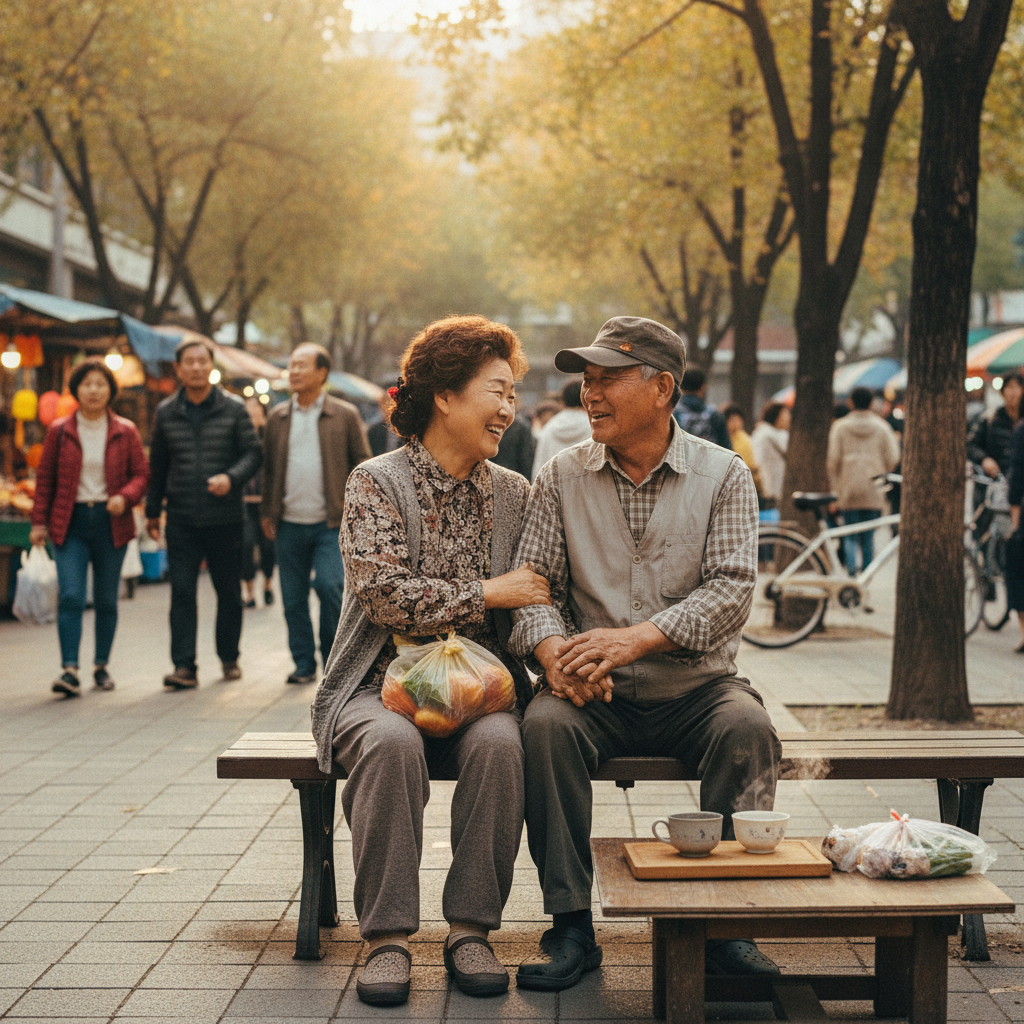
전통적으로 아줌마는 가정의 실질적인 안살림을 책임지고 자녀를 양육하며, 시장과 동네 골목에서 활발히 활동하는 생활력 강한 여성의 표상이었다.Traditionally, the ajumma was a representation of a resourceful woman who took practical charge of household management, raised children, and actively engaged in markets and neighborhood alleys.
그녀들은 때로는 투박하고 거침없는 언행으로 비판받기도 하지만, 가족과 공동체를 굳건히 지탱하는 숨은 주역이었다.They were sometimes criticized for their rough and unreserved words and actions, but they were the hidden protagonists who firmly supported their families and communities.
아저씨는 가장으로서 가족의 생계를 책임지고 사회생활의 중심에서 묵묵히 자신의 역할을 수행하는 남성의 전형을 이룬다.The ajeossi embodies the archetype of a man who, as the head of the family, takes responsibility for the family's livelihood and silently performs his role at the center of social life.
이들은 겉으로는 무뚝뚝해 보여도 속정 깊은 면모를 지니는 경우가 많다.These people often possess deep inner affection, even if they appear blunt on the surface.
그러나 급변하는 현대 사회에서 아줌마와 아저씨에 대한 인식은 복합적인 양상을 띤다.However, in rapidly changing modern society, the perception of ajumma and ajeossi takes on complex aspects.
과거의 긍정적 이미지와 더불어, 특정 스테레오타입에 갇혀 부정적으로 소비되는 경향도 나타난다.Along with the positive images of the past, there is also a tendency for them to be trapped in specific stereotypes and portrayed negatively.
예를 들어, '아줌마스러움'은 때로 공공장소에서의 소란이나 배려 부족을 의미하기도 하며, '아저씨스러움'은 권위주의적이거나 고루한 사고방식을 뜻하기도 한다.For example, 'ajumma-ness' sometimes means disturbance or lack of consideration in public places, and 'ajeossi-ness' can imply an authoritarian or old-fashioned way of thinking.
이러한 고정관념들은 실제 그들의 다양한 삶의 모습을 제대로 반영하지 못한다.Such stereotypes do not properly reflect the actual diverse aspects of their lives.
그럼에도 불구하고 아줌마와 아저씨는 여전히 한국 사회의 중요한 축을 이룬다.Nevertheless, ajumma and ajeossi still form an important pillar of Korean society.
그들은 가족의 울타리 안에서 든든한 버팀목이 되어주고, 사회 곳곳에서 묵묵히 자신의 역할을 다한다.They become reliable supports within the family's protective barrier and silently fulfill their roles in various parts of society.
시대의 흐름에 따라 그들의 모습과 역할은 변화하고 있지만, 한국 사회의 정체성을 이해하는 데 있어 이 두 원형은 필수적인 요소이다.Although their appearance and roles are changing with the times, these two archetypes are essential elements in understanding the identity of Korean society.
이들은 단순한 호칭을 넘어, 한국인의 삶과 역사를 관통하는 살아있는 문화적 상징으로 존재한다.They exist as living cultural symbols that penetrate the lives and history of Koreans, going beyond simple titles.
우리는 이들을 통해 한국 사회의 과거와 현재, 그리고 미래를 엿볼 수 있다.Through them, we can glimpse the past, present, and future of Korean society.
Key words
Words in this article
- 가정 family
- 가족 family
- 그 that
- 그들 they
- 그러나 however
- 그리고 and
- 두 two (before a counter)
- 들다 to give (an example)
- 때로 sometimes
- 많다 many
- 사회 society
- 시장 market
- 예 example
- 우리 we
- 이 this
- 함께 together
- 강하다 strong
- 겉 outside
- 과거 past
- 깊다 deep
- 단순하다 simple
- 또한 also
- 속 inside
- 숨다 to hide
- 시대 era
- 안 inside
- 여성 woman
- 의미 meaning
- 이러한 such
- 이미지 image
- 자신 self
- 제대로 properly
- 현재 present time
- 경우 case
- 고정관념 fixed idea
- 곳곳 various places
- 공공장소 public place
- 공동체 community
- 그렇다 so
- 깊이 deeply
- 끊임없다 endless
- 나타나다 to appear
- 넘다 to exceed
- 넘어서다 to go beyond
- 다소 somewhat
- 다양하다 various
- 다하다 to fulfill
- 대표하다 to represent
- 동시 simultaneity
- 되다 to become
- 든든하다 strong
- 뜻하다 to mean
- 띠다 to take on
- 모습 appearance
- 문화적 cultural
- 미래 future
- 미치다 to have (an effect)
- 반영하다 to reflect
- 배려 consideration
- 버팀목 support
- 변화 change
- 변화하다 to change
- 부정적 negative
- 부족 lack
- 비치다 to be seen
- 사고방식 way of thinking
- 사회생활 social life
- 살아있다 alive
- 삶 life
- 상징 symbol
- 생계 livelihood
- 수행하다 to perform
- 실제 reality
- 여전히 still
- 역사 history
- 역할 role
- 영향 influence
- 요소 element
- 의미하다 to mean
- 이루다 to achieve
- 이해하다 to understand
- 인식 awareness
- 자녀 children
- 전통적 traditional
- 정서 emotion
- 존재 existence
- 존재하다 to exist
- 중심 center
- 중요하다 important
- 지니다 to possess
- 집단 group
- 축 axis
- 친근하다 friendly
- 통하다 to pass through
- 특정 specific
- 한국인 Korean person
- 호칭 title
- 활동하다 to be active
- 활발하다 active
- 흐름 flow
- 경향 tendency
- 급변하다 to change rapidly
- 긍정적 positive
- 묵묵하다 silent
- 복합적 complex
- 실질적 practical
- 양상 aspect
- 연령 age
- 엿보다 to glimpse
- 정체성 identity
- 지대하다 great
- 지탱하다 to support
- 진화하다 to evolve
- 필수적 essential
Tap any word for its meaning, grammar and audio — and keep it as a card.
Read with Klick